April 3, 2027 — Look slowly. See more.

The annual event celebrating art.
Slow Art Day is Saturday, April 3, 2027 Join Us!
Photo by Greg Neville
Slow Art Day News
- Flora & Fauna at Gallery A3 in Massachusetts
Gallery A3 in Amherst, Massachusetts, hosted its first Slow Art Day on April 11, 2026. Laura Holland and Nancy Meagher, members of the artists’ cooperative gallery, organized an event where visitors selected a work to look at for five minutes, then used a “viewing tube” to help focus on details, drew what they focused on, and, after looking slowly, were then invited to chat with the artists.
The event began with a welcoming atmosphere, offering participants the added option to consider drawing as a way to engage more deeply with the art. Drawing materials and clipboards were readily available for those who wished to sketch after their five minutes of slow looking. Laura Holland and Nancy Meagher, whose works were currently on exhibit, were present to discuss the experience with visitors.
Participants were invited to choose artworks from the gallery’s current exhibit, “Flora & Fauna,” which featured photography and artist books by Laura Holland and paintings by Nancy Meagher.
The viewing tubes— paper towel tubes wrapped in Slow Art Day posters — helped participants concentrate on specific details. Worksheets with guiding questions were also provided as an optional tool to deepen the observation.
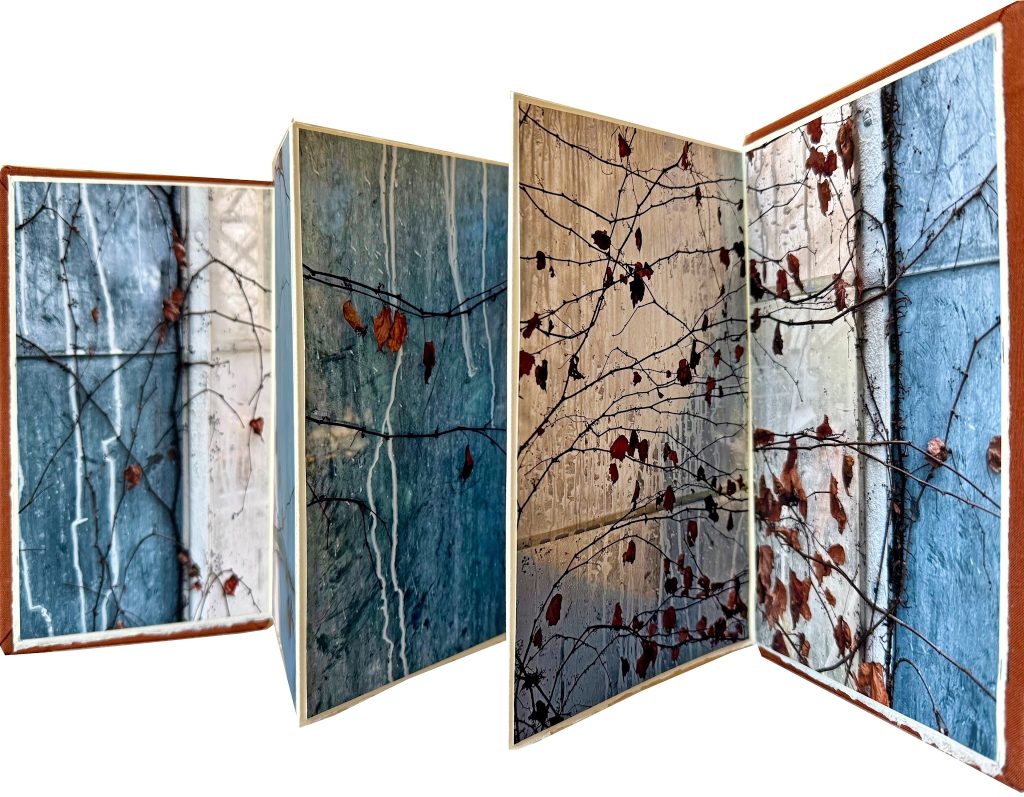
Winter Vines by Laura Holland. Photo courtesy of Gallery A3. 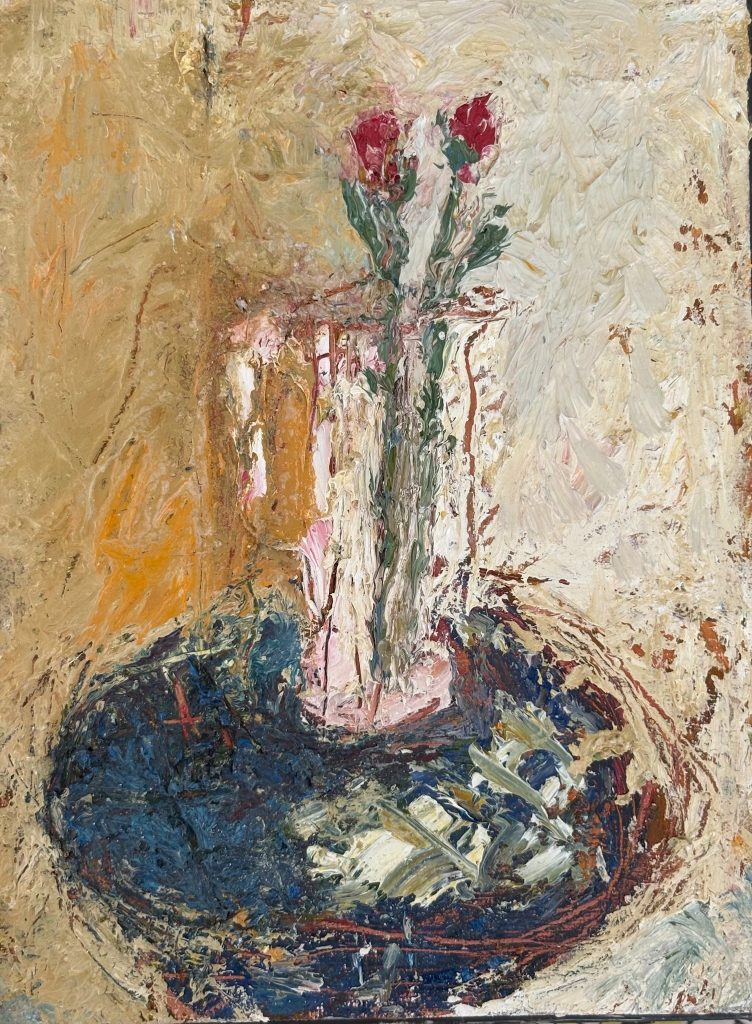
Sweetheart Roses by Nancy Meagher. Photo courtesy of Gallery A3. Approximately 15 participants attended the event. One participant said that the experience “made her day” and another called it “the best thing that happened that day.” Many visitors enjoyed the drawing component, with one woman creating five to six small drawings.
Like most Slow Art Day participants everywhere, many expressed surprise at how much they noticed during their focused looking. The artists were delighted by the level of engagement with drawing.
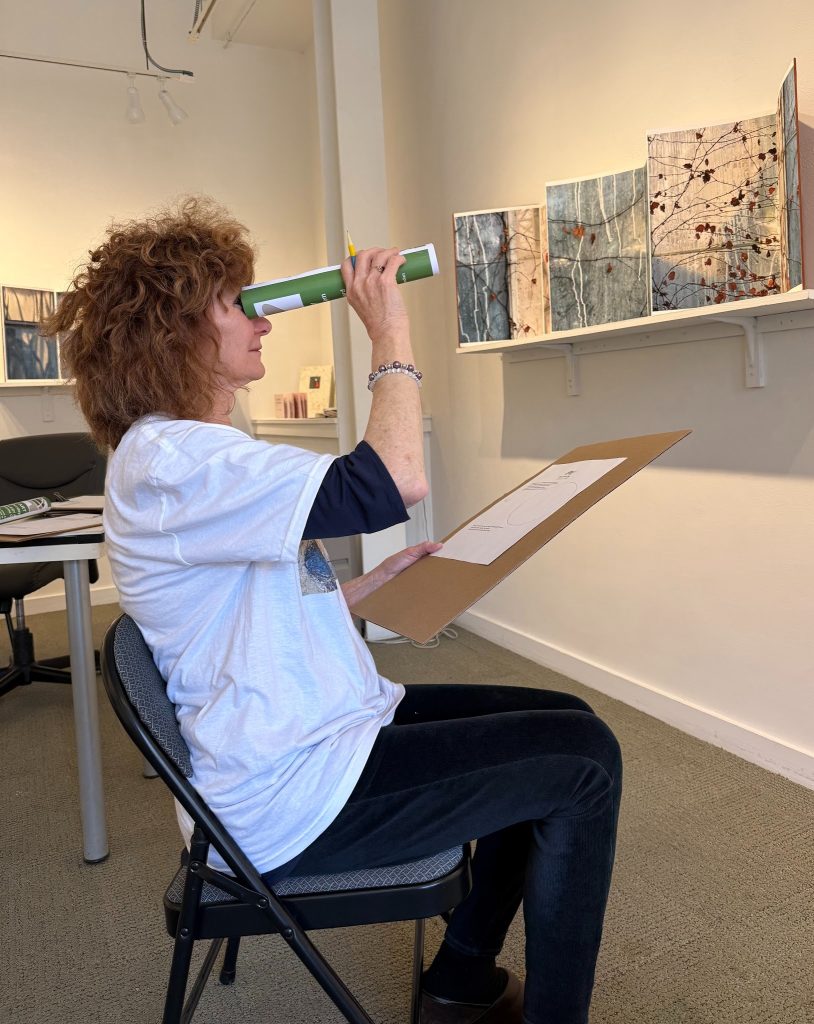
Participants engaging in slow looking and drawing at Gallery A3. Photo by Laura Holland. 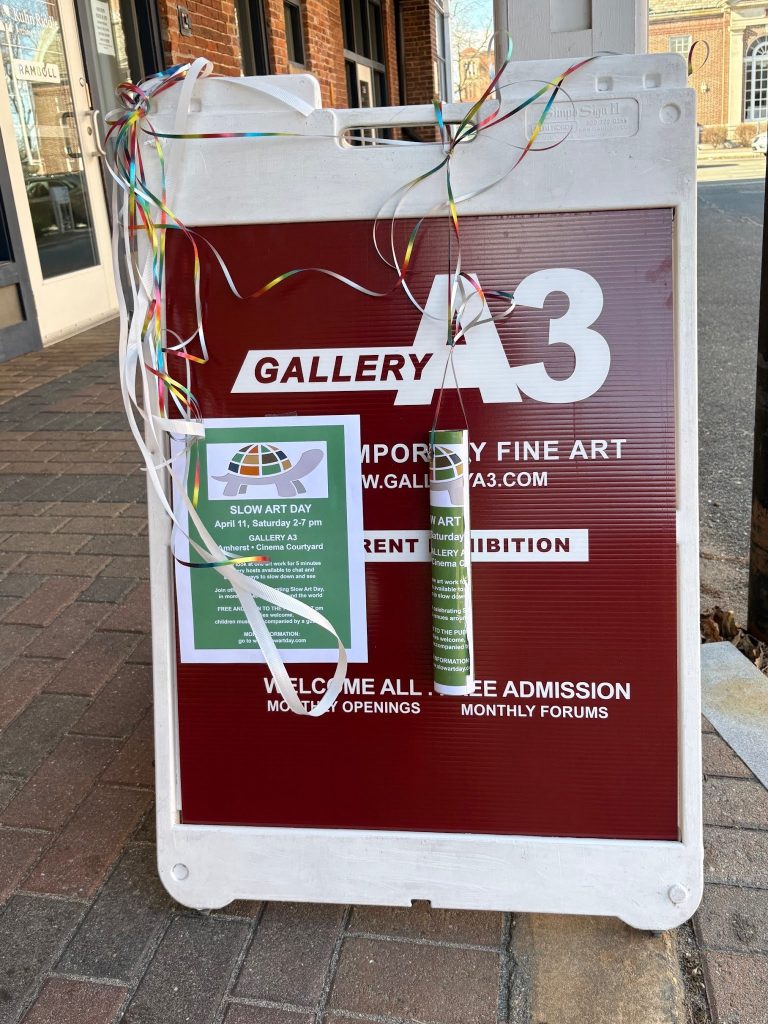
Slow Art Day poster at Gallery A3. Photo courtesy of Gallery A3. We at Slow Art Day HQ are grateful to Laura Holland and Nancy Meagher for their thoughtful and engaging first Slow Art Day event. We love the viewing tubes. That’s a simple and wonderful innovation.
We look forward to seeing what they come up with for Slow Art Day 2027.
— Ashley, Johanna, Jessica Jane, and Phyl
P.S. Learn more about Gallery A3 on their website.
- Ashmolean Museum Hosts 10th Slow Art Day
On April 11, 2026, the Ashmolean Museum at Oxford University, hosted its tenth annual Slow Art Day, welcoming visitors for a unique experience of slow looking.
Led by Educator Jude Barrett and Gallery Lecturers Lynne Ward and Anna Steven, the event offered a guided slow looking session followed by a facilitated discussion over afternoon tea. The Ashmolean Museum has been a consistent and enthusiastic participant in Slow Art Day, even hosting online during the COVID pandemic, and their events are consistently fully booked.
The featured artworks, chosen by co-host Lynne Ward and all located on the same floor for ease of movement, included:
- “Portrait of Prince Rupert, Colonel William Legge and Colonel John Russell” by William DOBSON (1611-1646), c 1645
- “Roman Capriccio” by Giovanni Paolo PANINI (1691-1765), 18th century
- “Still Life” by William VAN AELST, 17th century
- Fitzwilliam COIN CABINET, 1748-50 – stand made in England c1720-90
- “Blowing Hot, Blowing Cold” by Matthias STOM (c1589/1600-after 1652), c1640
View a word doc with images and details of all of the works.
The event began with a guide introducing each work, after which participants had seven minutes for quiet, independent looking.
To aid in close observation, guests were encouraged to sketch or write in a notebook, to feel comfortable in the space, and to sit or move around to view the object or work from different perspectives.
Following this silent looking period, the group engaged in a brief discussion about their observations, what stood out, how the work made them feel, and their interpretations.
This process was repeated for each of the five selected works.
At the conclusion of the slow looking session, everyone gathered for afternoon tea (how civilized, how British!), providing a relaxed setting to further discuss their experiences, the artworks, and the power of slow looking.
A total of 24 people attended the event. Participants said they quite enjoyed the experience would like to participate in slow looking again.
Like most who slow down, many were surprised by just how enjoyable slow looking can be.
We at Slow Art Day HQ are grateful to Jude Barrett, Lynne Ward, Anna Steven, and the entire team at the Ashmolean Museum for their continued dedication to Slow Art Day.
Their commitment to fostering deep engagement with art, evident in their fully booked events and near-universal positive responses, is truly inspiring. We look forward to seeing what they create for Slow Art Day 2027.
— Ashley, Johanna, Jessica Jane, and Phyl
P.S. You can learn more about the Ashmolean Museum by visiting their website or Instagram.
- Klimt Color Enigma and AI at Deutsches Museum Bonn in Germany
On Slow Art Day 2026, the Deutsches Museum Bonn in Bonn, Germany, welcomed visitors for their second annual Slow Art Day event. Curator Tanja Löschner, alongside hosts Luise Gottfriedsen and Maxim Frick, invited participants to explore “The Klimt Color Enigma,” an experience focused on Gustav Klimt’s Faculty Paintings. The event encouraged guests to view the black and white versions of these destroyed works before experiencing their recolored interpretations (love that!).
The event began in the AI Cabinet of the Deutsches Museum Bonn, where attendees gathered to look at three of Gustav Klimt’s Faculty Paintings. The originals were destroyed when retreating Nazi SS troops deliberately set fire to Immendorf Castle in Austria on May 8, 1945, an act of needless destruction on the very day the war in Europe ended and their genocidal regime fell.
Participants were first invited to examine the black and white photos, taken before the war, allowing their imaginations to consider what colors might have originally adorned the Sphinx or the walls in the Jurisprudence building. This slow looking process encouraged a deep, personal connection with the art, prompting reflection on the lost vibrancy of the paintings.
Following this exercise, the hosts revealed the recolored versions of the paintings, brought to life through artificial intelligence, a computer scientist, and an art historian.
This allowed visitors to compare their mental images with the AI-generated interpretations. No specific prompts were used, but participants were encouraged to simply look.
Comfortable seating and yoga mats were provided in the Cabinet, contributing to a slow experience.
Approximately 30 people attended. We at Slow Art Day HQ are glad to see the smiles and joy this art experience brought modern visitors deprived of looking at the originals.
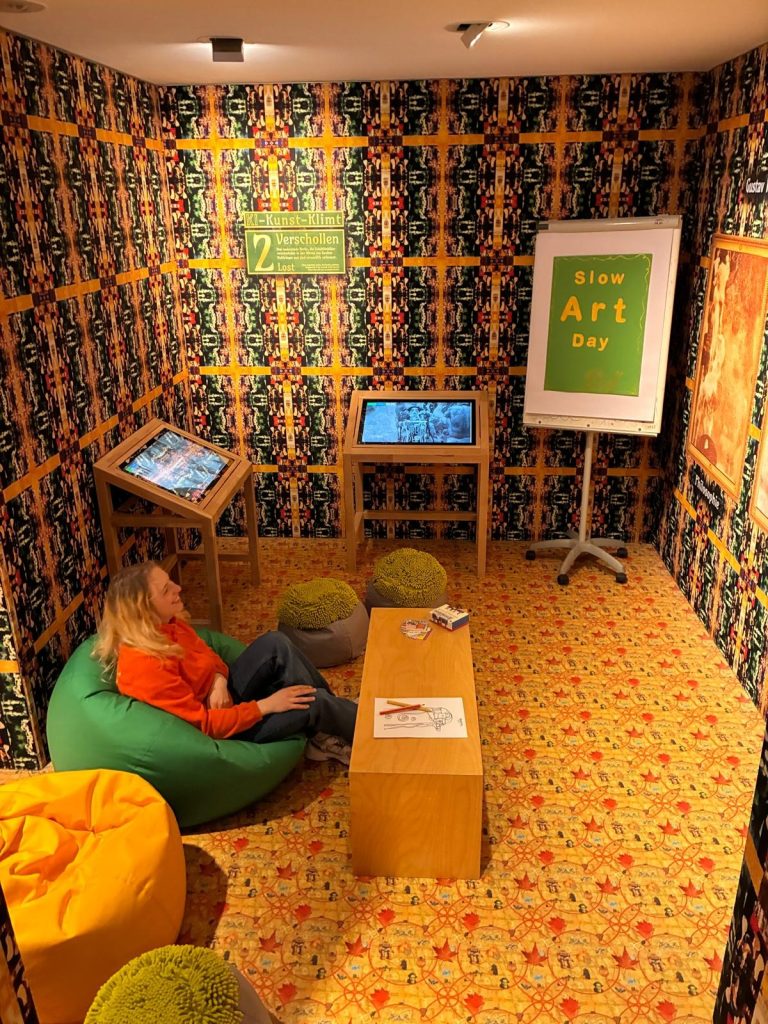
Klimt, Faculty Paintings. Photo courtesy of Deutsches Museum Bonn. 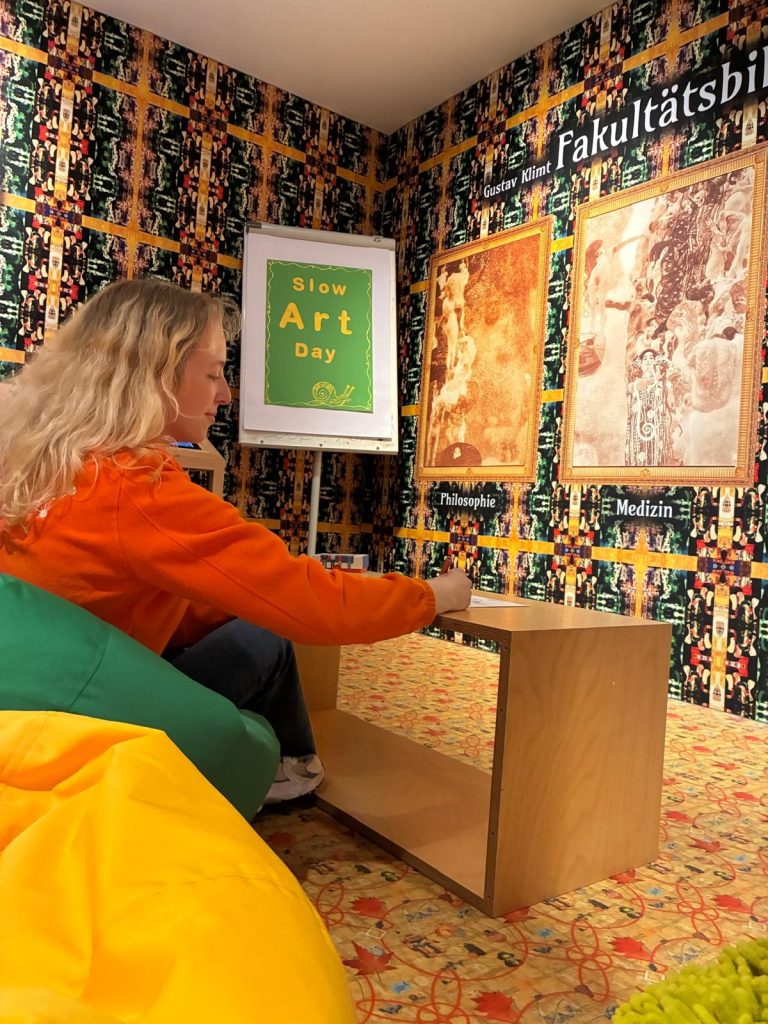
Klimt, Faculty Paintings. Photo courtesy of Deutsches Museum Bonn. 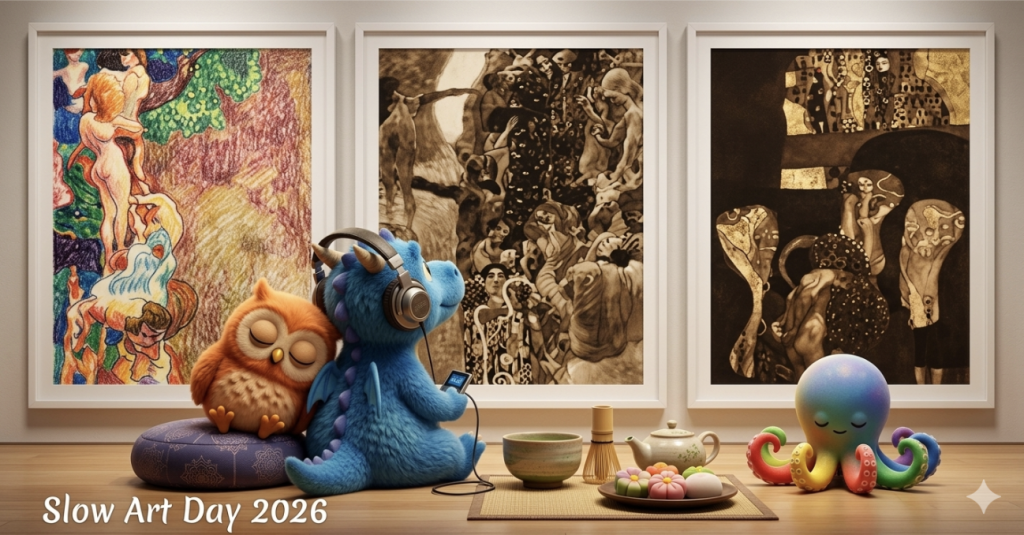
Text and Gemini Picture for the Children. Photo courtesy of Deutsches Museum Bonn. We at Slow Art Day HQ are grateful to Tanja Löschner, Luise Gottfriedsen, Maxim Frick, and the Deutsches Museum Bonn for their continued dedication to fostering slow art experiences. And, in this case, we are deeply appreciative of their efforts to bring these important works, destroyed decades ago, back to life for people today.
We look forward to seeing what wonderful design they come up with for Slow Art Day 2027.
— Ashley, Johanna, Jessica Jane, and Phyl
P.S.:
Learn more about Deutsches Museum Bonn on their website and Instagram.
- Sixth Slow Art Day at Glen Foerd in Pennsylvania
Glen Foerd, a historic estate and public park in Philadelphia, Pennsylvania, hosted its sixth annual Slow Art Day on April 11, 2026. Executive Director Ross Mitchell guided participants through a facilitated discussion focused on close observation of art.
The event began with participants welcomed to the second-floor art gallery, where they sat before three historic paintings displayed on easels. Ross Mitchell introduced the Barnes Method, priming the audience to observe art through specific lenses such as color, light, line, and space. He encouraged attendees to approach art with the painstaking appreciation a surgeon might have for anatomy, considering each interlocking part of a living structure. Following this introduction, he invited the group to spend several silent minutes with the first painting before guiding a discussion. This process was repeated for each artwork, with audience members sharing their findings and connections. This exercise prepared the group to apply the same level of analysis to a contemporary multimedia installation located in a separate part of the mansion. Prompts included vocabulary like “creative distortion,” “local & nonlocal color,” and discussions of illustrative, decorative, and expressive aspects, all designed to deepen appreciation for the artists’ strategies.
Featured Works:
- “Threadbare and Tarnished: Tales from a Gilded Age,” 2017, Mixed Media by Talia Eve Greene
- “Village and Calvary,” c. mid-1930s, Oil on canvas by Luigi Setanni
- “Head of a Young woman in a Black Feathered Hat,” 1862, Oil on Panel by Thomas Sully
- “The Madonna Lily,” c. 1925, Oil on canvas by Edith Emerson
These pieces were chosen for their wide breadth of creative devices and subjects, which allowed for more creative and dynamic comparison during the facilitated discussions. Participants reflected on the peaceful feeling of paying slow, close attention to art, finding it an unintentional respite from screens and the many demands of modern life. One regular volunteer and visitor shared that she gained a new appreciation for paintings she had seen many times before (we hear that a lot from docents, curators, and educators).
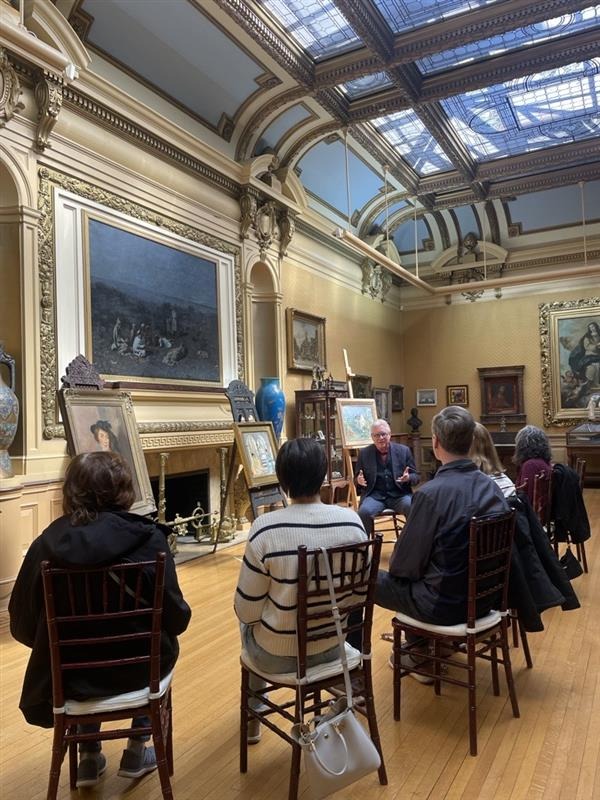
Participants engaged in facilitated discussion at Glen Foerd. Photo credit: Isabel Brown. 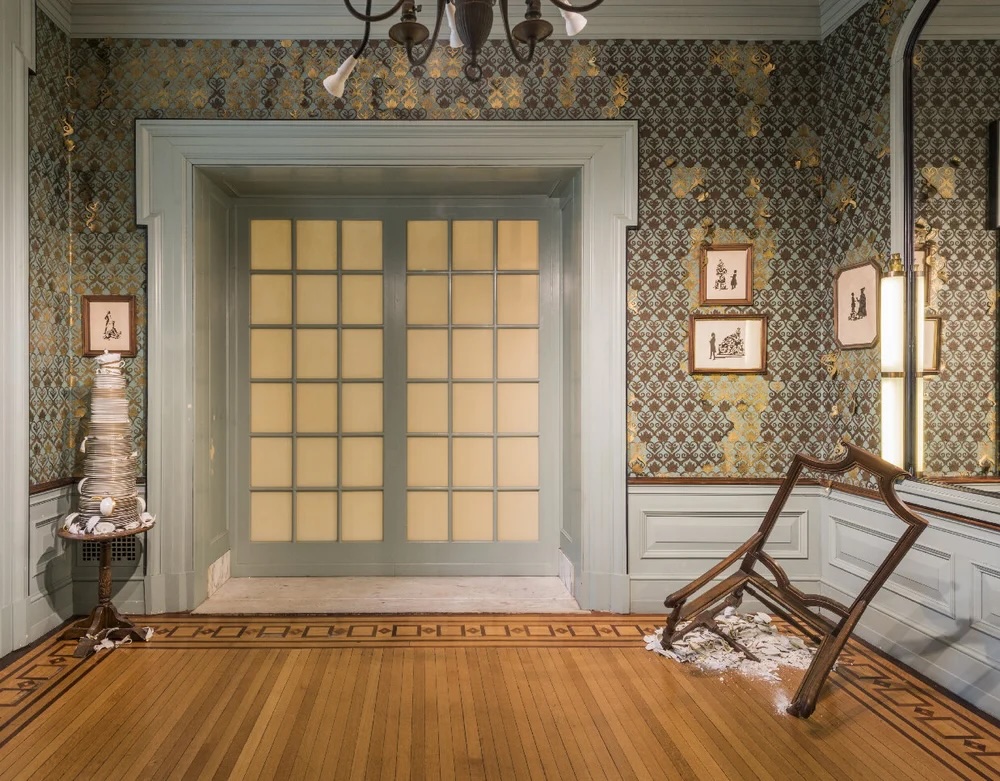
Threadbare and Tarnished: Tales from a Gilded Age, 2017, Mixed Media by Talia Eve Greene. Photo courtesy of Glen Foerd. 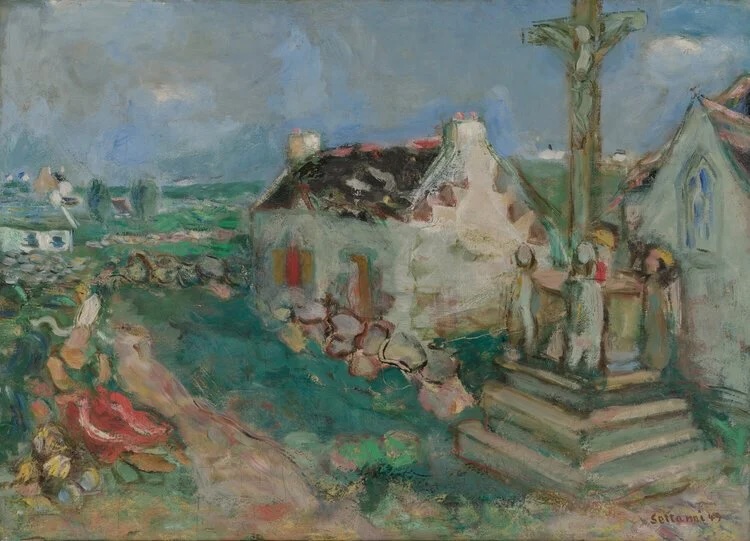
Village and Calvary, c. mid-1930s, Oil on canvas by Luigi Setanni. Photo courtesy of Glen Foerd. 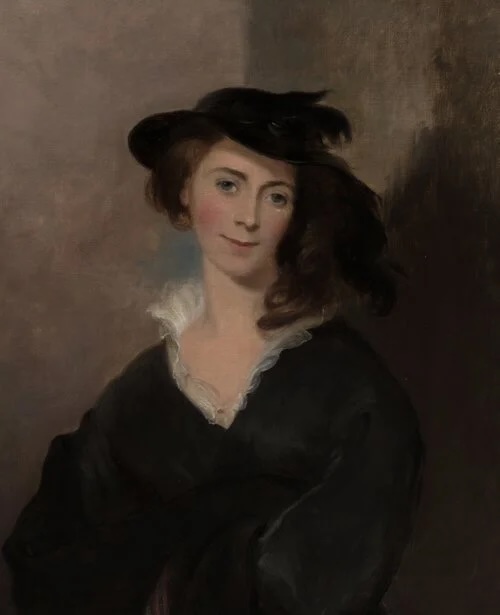
Head of a Young woman in a Black Feathered Hat, 1862, Oil on Panel by Thomas Sully. Photo courtesy of Glen Foerd. 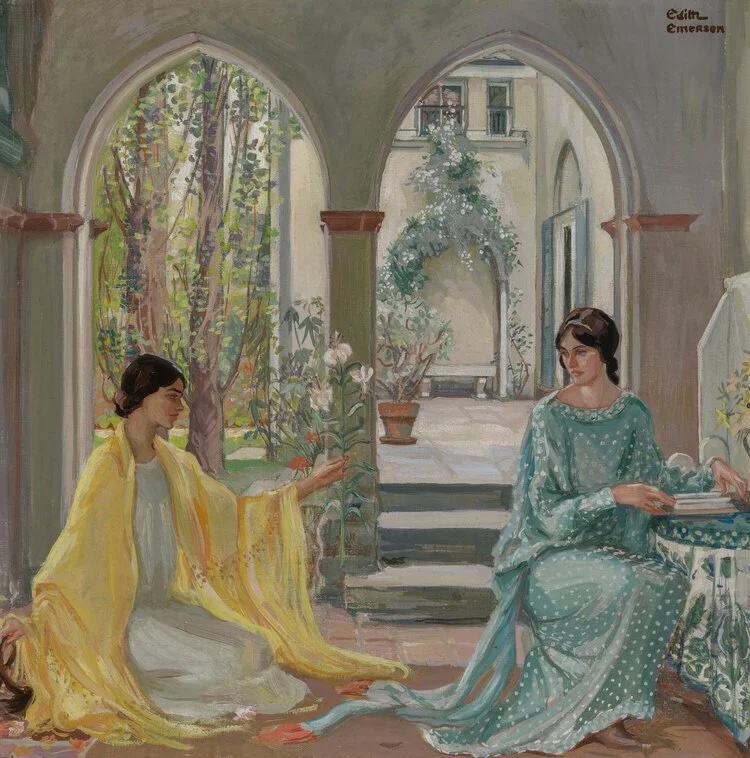
The Madonna Lily c. 1925, Oil on canvas by Edith Emerson. Photo courtesy of Glen Foerd. We at Slow Art Day HQ are grateful to Ross Mitchell and the team at Glen Foerd for their continued dedication to the principles of our movement. Their thoughtful approach provides a unique and enriching experience for participants. We look forward to seeing what they design for Slow Art Day 2027.
— Ashley, Johanna, Jessica Jane, and Phyl
P.S. Learn more about Glen Foerd on their website and Instagram.